China Top Strength Equipment Manufacturers for Global Buyers
China has become a major sourcing hub for Strength Equipment, serving gyms, hotels, rehabilitation centers, and home-training brands worldwide. Its manufacturers offer power racks, cable machines, benches, plate-loaded systems, and customized commercial solutions. Yet a polished catalog does not prove dependable quality.
This guide examines China’s leading Strength Equipment manufacturers through practical buyer criteria. These include steel thickness, weld consistency, pulley movement, upholstery density, powder-coating durability, load ratings, and replacement-part availability. A serious evaluation should include factory audits, sample testing, production photographs, and clear documentation. Certifications matter, but they should support inspection rather than replace it.
As strength-training researcher Dr. Brad Schoenfeld explains, “Progressive overload is the key driver of muscle growth.” Equipment must therefore remain stable as training loads increase. A loose cable or poorly aligned guide rod can damage user confidence quickly. Small details matter.
China offers strong manufacturing value. However, value is not the same as the lowest quotation. Buyers should compare total ownership costs, including freight, installation, warranty support, spare parts, and communication. Some suppliers are highly experienced exporters. Others may still need stronger quality controls.
This overview is not a promise that every listed manufacturer will fit every project. Markets change. Factories improve, merge, or lose consistency. That is why current verification remains essential. The most reliable buying decision combines technical evidence, transparent communication, and hands-on product experience. A useful shortlist should make comparison easier, not create false certainty.
What Defines a Top Strength Equipment Manufacturer in China
China Top Strength Equipment Manufacturers for Global Buyers
What Defines a Top Strength Equipment Manufacturer in China
A top strength equipment manufacturer combines engineering skill, factory discipline, and honest communication. Product quality begins with material selection, not surface paint. Commercial frames should use properly specified steel, accurate tubing, and controlled welding processes. Inspectors should check weld penetration, alignment, and sharp edges before assembly.
Useful evidence matters. A reliable manufacturer can provide drawings, load-testing records, material details, and inspection reports. These documents should match the finished equipment. Ask to see a working production line, not only a polished showroom. Observe workers installing cables, tightening bolts, and checking moving arms. Small details often reveal manufacturing habits.
Safety must remain practical. Handles need secure grips, benches need stable adjustment points, and pivot systems should move without unwanted play. Experienced manufacturers also understand shipping damage, installation limits, and maintenance needs. They can discuss packaging thickness, spare parts, and replacement procedures clearly.
No factory gets every detail right. That deserves attention. A supplier may have strong welding but weak documentation, or excellent design but inconsistent final inspection. Buyers should test samples, compare tolerances, and record defects before placing larger orders. Honest factories welcome difficult questions and explain corrective actions. They do not hide behind certificates. Performance on the training floor matters more.

Key Strength Equipment Categories and Manufacturing Capabilities
For global buyers, strength equipment manufacturing starts with clear category planning.
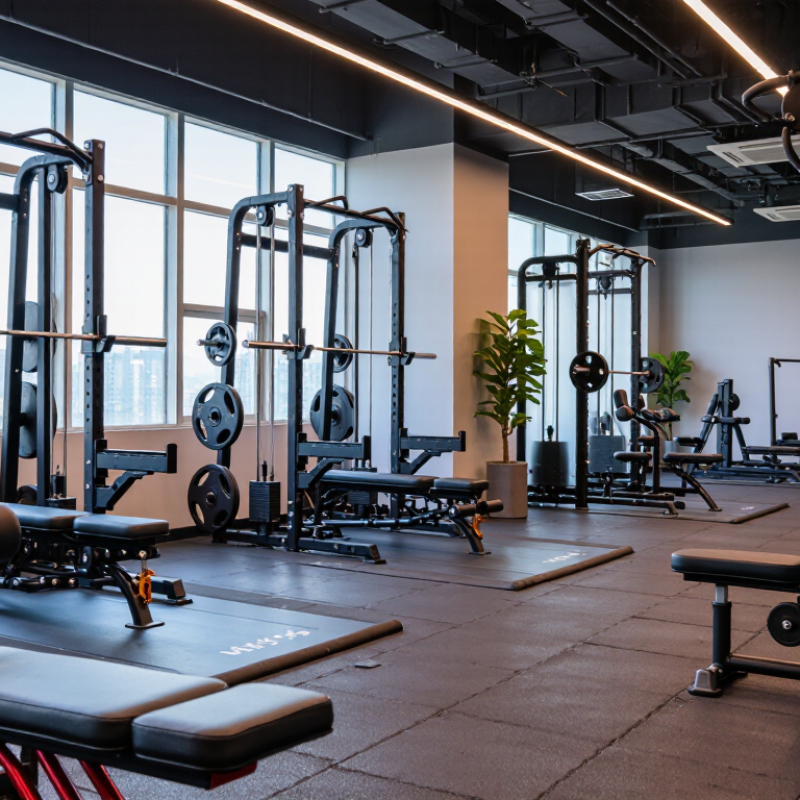
Power racks, half racks, benches, and lifting platforms serve free-weight training. Cable stations and functional trainers support controlled resistance and compact layouts. Plate-loaded machines suit heavy training, while selectorized machines offer faster adjustments. Barbells, weight plates, and storage systems complete the training floor.
Each category demands different engineering choices. A bench needs stable welds and firm upholstery. A cable unit needs smooth routing, guarded pulleys, and precise movement.
Experienced factories typically combine tube cutting, CNC machining, robotic or skilled welding, and powder coating. Steel thickness should match the intended load, not only the advertised capacity. Manufacturers may use finite element analysis, fatigue testing, and repeated load checks before production release.
Operators should inspect weld penetration, hole alignment, cable tension, and bolt fit.
Small errors matter. Surface preparation also affects coating life, especially in humid gyms or coastal markets. Some suppliers provide installation drawings, spare-part lists, user manuals, and packaging tests for export shipments.
Global buyers should review material specifications, test methods, factory quality records, and product samples before placing large orders. Ask how working load differs from ultimate failure load. That distinction is often missed.
Custom colors, logo-free packaging, metric or imperial hardware, and regional safety documentation can support different markets. However, customization may extend lead times and complicate replacement parts.
A reliable manufacturer explains these limits instead of promising everything. Even strong production systems need ongoing correction; field feedback may reveal awkward handles, noisy cables, or packaging damage that factory inspections failed to catch.
How to Assess Product Quality, Safety, and Certification
When evaluating China’s top strength equipment manufacturers, product quality begins with traceable materials and controlled production. Ask for steel grades, supplier records, and inspection procedures. A serious factory should explain how frames, welds, cables, and adjustment parts are checked.
Look closely at practical details. Welds should appear even, without visible cracks, sharp edges, or excessive spatter. Frames should remain stable during repeated loading. Test benches should reveal unwanted movement. They often do. Inspect upholstery seams, protective coatings, pulley alignment, and fastener access. Small defects may become safety problems after months of commercial use.
Safety assessment must cover pinch points, weight limits, guards, emergency stops, and user instructions. Request load-testing records for each relevant model, not only a general factory report. Certification also needs careful review. Confirm the certificate’s issuing organization, validity period, tested model, and applicable market. A logo on a document proves little by itself. Certification scope matters.
Independent inspections can verify dimensions, materials, packaging, and functional testing before shipment. Ask for corrective-action records when defects appear. This shows how the manufacturer responds under pressure. I would not rely on photographs alone. They can hide inconsistent finishing or incomplete assembly. Video testing helps, but physical inspection remains stronger. Requirements differ by destination, so buyers should confirm current local standards with qualified compliance professionals.
Why China’s Strength Equipment Manufacturers Serve Global Markets
China Top Strength Equipment Manufacturers for Global Buyers
China’s strength equipment manufacturers serve global markets through scale, engineering depth, and export-ready production systems. UNIDO’s International Yearbook of Industrial Statistics 2024 reports that China produced about 31.6% of global manufacturing value added in 2022. That industrial base supports metal forming, welding, machining, powder coating, and packaging within connected supply networks.
The domestic market also encourages rapid product testing. China’s General Administration of Sport reported that the national sports industry reached approximately RMB 3.3 trillion in total scale during 2022. Manufacturers therefore develop equipment for commercial gyms, rehabilitation centers, hotels, and home users. Buyers can request load-test records, material certificates, inspection photos, and compliance evidence for ISO 20957 or applicable local standards.
Production is not everything.
Experienced exporters understand regional differences. A rack designed for a compact European studio may need different dimensions, labeling, and carton protection for a warehouse gym in North America. Better factories discuss weld penetration, cable fatigue, bolt grades, and replacement-part availability before accepting an order. Some suppliers still rely too heavily on catalog images and general test claims. That weakness deserves scrutiny. Independent inspections, sample testing, and clear warranty terms remain necessary. China’s manufacturing advantage is substantial, but reliability depends on the specific factory, process controls, and after-sales discipline.
China Top Strength Equipment Manufacturers for Global Buyers - Why China’s Strength Equipment Manufacturers Serve Global Markets
| Equipment Category | Typical Global Buyer Applications | Common Resistance or Load Format | Typical Construction Materials | Relevant International References | Common Customization Options | Why It Serves Global Markets |
|---|---|---|---|---|---|---|
| Power Racks and Squat Racks | Commercial gyms, strength studios, sports-performance centers, and home training spaces | Olympic bars, bumper plates, cast-iron plates, and plate-loaded attachments | Welded carbon-steel frames, laser-cut steel plates, zinc-plated hardware, and powder-coated surfaces | ISO 20957 series and ASTM F2276, where applicable to the product and market | Frame dimensions, hole spacing, storage posts, pull-up bars, safety arms, colors, logos, and packaging | Modular designs can be adapted to different facility layouts, shipping requirements, and training systems |
| Benches and Adjustable Benches | Weight rooms, personal-training studios, rehabilitation facilities, and residential gyms | Free weights, dumbbells, barbells, and plate-loaded exercises | Steel tubing, reinforced pivot brackets, high-density foam, and abrasion-resistant upholstery | ISO 20957-1 and applicable regional product-safety requirements | Backrest angles, seat adjustments, pad thickness, frame color, upholstery material, and carton configuration | Simple mechanical structures support efficient production, flat-pack shipping, and private-label programs |
| Cable Crossover and Functional Trainers | Multipurpose gyms, hotels, apartment fitness rooms, athletic centers, and physical-training facilities | Weight stacks or plate-loaded resistance connected through pulleys and adjustable cable positions | Steel frames, machined pulleys, coated cables, guide rods, selector pins, and molded protective components | ISO 20957-1 and applicable parts of the ISO 20957 series | Cable ratio, pulley layout, stack size, attachment kits, frame height, color, and user instructions | A broad supplier base supports multiple configurations, cost levels, and container-loading solutions |
| Plate-Loaded Strength Machines | Commercial clubs, bodybuilding facilities, school gyms, and strength-focused training centers | Olympic plates mounted on loading horns, with guided or lever-based movement | Heavy-gauge steel, forged or machined pivot components, linear bearings, and commercial-grade upholstery | ISO 20957-1 and relevant equipment-specific safety requirements | Exercise angle, lever geometry, loading-horn position, handle design, upholstery, and frame finish | Designs can be engineered for different user heights, room sizes, and regional preferences |
| Selectorized Weight-Stack Machines | Health clubs, hotels, corporate gyms, rehabilitation centers, and community facilities | Integrated weight stacks selected with a pin and transferred through cables or linkages | Welded steel frames, guide rods, steel or coated cables, molded shrouds, and layered foam pads | ISO 20957-1 and applicable parts of the ISO 20957 series | Stack increments, seat positions, movement range, protective covers, upholstery, and multilingual manuals | Factory production can combine standardized platforms with buyer-specific dimensions and finishes |
| Dumbbells, Kettlebells, and Weight Plates | Retail channels, gyms, schools, home fitness, strength studios, and training programs | Fixed-weight units, adjustable systems, cast-iron plates, steel plates, and rubber- or urethane-coated products | Cast iron, machined steel, stainless steel, rubber, urethane, and textured grip materials | Applicable ISO 20957 provisions and destination-market material, labeling, and chemical requirements | Weight increments, handle diameter, coating hardness, color coding, engraving, packaging, and sets | Multiple metal-processing and coating capabilities support both economical and premium product lines |
| Smith Machines and Guided Bar Systems | Commercial gyms, apartment facilities, sports clubs, and multifunctional home gyms | Guided barbell movement with plate-loaded resistance and adjustable safety catches | Steel uprights, chrome-plated or treated guide surfaces, linear bearings, safety hooks, and bar assemblies | ISO 20957-1 and applicable mechanical-safety requirements in the destination market | Bar travel angle, counterbalance, catch positions, storage, attachments, frame size, and finish | Manufacturing flexibility allows adaptation for compact spaces and different installation standards |
| Multi-Station and Combination Gyms | Hotels, residential developments, schools, military facilities, and space-limited gyms | Combined cable, weight-stack, bodyweight, and plate-loaded training stations | Powder-coated steel frames, cables, pulleys, weight stacks, molded guards, and commercial upholstery | ISO 20957 series, plus electrical and electromagnetic requirements for powered accessories where applicable | Station count, footprint, exercise selection, stack configuration, cable ratios, colors, and installation kits | Integrated designs reduce floor-space requirements and can be configured for project-based procurement |
Note: Product specifications, testing obligations, customs classifications, and conformity requirements vary by model and destination market. Buyers should confirm applicable standards and documentation before placing an order.
How Global Buyers Can Select and Partner with the Right Supplier
China Top Strength Equipment Manufacturers for Global Buyers
Global buyers should evaluate Chinese strength equipment manufacturers beyond catalog prices. Fortune Business Insights valued the global fitness equipment market at USD 16.73 billion in 2023. It projects the market to reach USD 28.95 billion by 2032. This growth increases supplier choices, but also increases verification risks.
Ask for factory audit records, material specifications, load-test videos, and recent export references. ISO 9001 certification can support process consistency, although it does not guarantee product quality. Request samples with visible welds, pulley movement, cable routing, and powder-coating thickness. Test them under repeated commercial use. Small details matter.
The 2024 ACSM Worldwide Survey identified wearable technology, older-adult fitness, and functional training among major industry trends. Suppliers should explain how their equipment supports different users and facility layouts. Check spare-part availability, packaging strength, installation instructions, and response times before signing. A clear inspection plan should define acceptable defects and testing methods. Do not rely on polished factory tours alone.
That is where many buyers misjudge suppliers. A low quote may hide slower replacement support or inconsistent batches. Ask the manufacturer to repeat key tests on production units, not only prototypes. Include delivery terms, warranty scope, technical files, and dispute procedures in writing. Independent pre-shipment inspection adds cost. It may prevent larger losses.
Article Source:
Contact Us
Phone: (650) - 522-4653 (GOLF)
Fax: (650) 522-7511
Tee Time Reservations: (650) 522-4653 (GOLF)
Location
1700 Coyote Point Drive
San Mateo, CA 94401