China Top 10 Municipal Golf Course Suppliers
China’s municipal golf course market is becoming more practical, local, and performance-driven. Public courses now face tighter water budgets, aging equipment, rising maintenance costs, and stronger expectations from everyday players. The R&A’s Global Golf Participation Report 2023 recorded approximately 66.6 million golfers worldwide, showing sustained demand for accessible facilities. Its findings also highlight the growing importance of affordable, community-based golf development.
China’s golf industry remains uneven, however. Some cities invest in smart irrigation and drought-tolerant turf, while others still depend on expensive imported equipment and fragmented after-sales service. This gap makes supplier selection critical. The right partner should provide reliable mowers, irrigation systems, golf carts, turf products, maintenance tools, and responsive technical support. Price alone is not enough.
Michael J. Hurdzan, a respected golf-course architect and former ASGCA president, has emphasized, “The golf course should fit the land, not force the land to fit the course.” That principle matters for every municipal golf course in China. Local climate, soil drainage, water availability, and public access should shape procurement decisions.
This guide examines China’s top 10 municipal golf course suppliers through product range, engineering capability, service coverage, and practical value. Information is considered alongside industry research from The R&A, the National Golf Foundation, and publicly available supplier data. Some rankings remain debatable. That is worth admitting. Supplier performance can change quickly, especially when service quality differs between regions. A strong shortlist should therefore support careful site inspections, trial use, and direct customer verification.
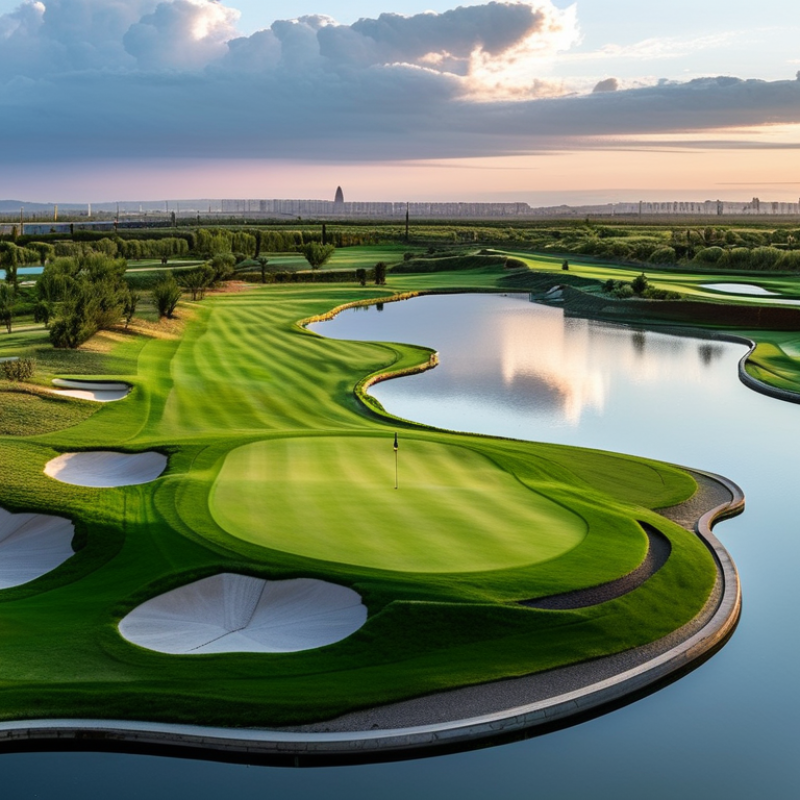
What Municipal Golf Course Suppliers Provide in China
China’s leading municipal golf course suppliers usually provide more than turf and mowing equipment. They support planning, construction, irrigation, drainage, lighting, and long-term maintenance. Some suppliers also offer soil testing, grass selection, water-saving systems, and clubhouse landscaping. Their teams may survey the site, study rainfall patterns, and prepare technical drawings before installation. This practical support helps public courses control costs and protect playing quality.
Reliable suppliers should provide clear specifications, project references, maintenance schedules, and staff training. They may supply mowing machines, aerators, fertilizers, irrigation controllers, drainage pipes, and replacement parts. After-sales service is important, especially during heavy rain or peak growing seasons. A useful supplier explains expected service life and operating costs, not only the purchase price. However, technical documents can still be incomplete. Buyers should request measurable performance data and written warranty terms.
Tips: Ask for a site inspection before accepting a quotation. Check soil reports, water quality, and drainage capacity. Compare at least three detailed proposals. Visit completed municipal projects when possible. Review spare-part availability and response times. One overlooked issue is staff turnover; simple training materials can prevent poor equipment use. Suppliers may promise fast results, but turf recovery often takes longer than planned. Careful monitoring is still necessary.
How China’s Top Ten Suppliers Are Selected and Compared
China Top 10 Municipal Golf Course Suppliers
Selecting China’s top ten municipal golf course suppliers requires more than comparing catalog prices. The review begins with verified project experience, product documentation, and installation records. Suppliers with completed public-course projects receive closer attention. Site visits can reveal drainage quality, turf performance, and maintenance access. Paperwork alone is not enough.
Each supplier is compared through a weighted evaluation model. Product durability, water efficiency, replacement costs, and technical support receive major consideration. Auditors also check production capacity, quality controls, delivery history, and after-sales response times. Independent test reports add authority. Clear warranties improve reliability. References from course managers matter greatly. Their daily experience often exposes problems hidden in sales presentations.
The comparison is not perfectly objective. Soil, rainfall, labor skills, and municipal budgets vary between regions. A supplier performing well in a coastal project may struggle inland. Sample testing should continue through installation and seasonal use. Price rankings may change after transport, repairs, and training are included. Even reference checks have limits. Some feedback may be incomplete or overly favorable. A careful selection process records these uncertainties instead of hiding them. It also reviews whether suppliers follow applicable environmental, construction, and safety requirements.
Profiles of China’s Leading Municipal Golf Course Suppliers
China’s leading municipal golf course suppliers are judged by more than equipment volume. Their value appears in planning, installation, maintenance, and long-term support. Experienced suppliers study local rainfall, soil conditions, water access, and public traffic before proposing a course system. This reduces costly redesigns after construction begins.
Several established suppliers focus on irrigation networks. Their engineers calculate pressure zones, pipe sizes, drainage paths, and daily water demand. They may provide smart controllers, weather sensors, and maintenance training for municipal teams. Practical testing matters. A system that performs well in a factory can struggle beside a crowded park or public road.
Other leading suppliers provide turf machinery, lighting, practice facilities, and course furniture. Reliable teams offer clear specifications, installation records, spare-part guidance, and responsive service schedules. Some also help municipalities improve accessibility and reduce chemical and water use. Small details matter, such as quiet mowing near residential areas and safe storage for maintenance tools.
No supplier gets every detail right. Some proposals still underestimate seasonal labor and future repair costs. Buyers should inspect completed sites, request measurable performance data, and speak with maintenance staff. Honest suppliers welcome these questions. Their reputation should come from documented results, trained personnel, and consistent after-sales support, not impressive promises alone.
Key Products, Services, and Project Capabilities
China Top 10 Municipal Golf Course Suppliers: Key Products, Services, and Project Capabilities
Municipal golf course suppliers in China provide more than turf and clubhouse equipment. Strong suppliers usually offer course planning, drainage design, irrigation systems, lighting, turf machinery, and maintenance tools. Their project teams may manage soil testing, grading, grass installation, and water-saving upgrades. Some also supply electric carts, practice-range systems, safety barriers, and digital monitoring equipment. Practical experience matters. A supplier with completed municipal projects can better handle public access, tight schedules, and changing site conditions.
Service capability often separates reliable suppliers from ordinary traders. Look for engineers who can inspect soil, review water pressure, and prepare phased construction plans. Ask for testing records, installation standards, warranty terms, spare-part support, and maintenance training. Suppliers with in-house technical teams may respond faster during drainage failures or irrigation problems. Still, supplier claims need careful checking. A polished proposal is not proof of field performance. Request project photos, measurable results, and references from comparable courses.
Tips: Compare drainage capacity, water consumption, service response, and local labor support before choosing. Keep technical requirements in writing. Visit a completed site if possible. Small omissions can become expensive repairs. Also, allow a realistic maintenance budget; beautiful turf can decline quickly without trained staff and suitable equipment.
China Top 10 Municipal Golf Course Suppliers: Key Products, Services, and Project Capabilities
This chart presents a comparative capability framework for municipal golf course suppliers in China. The index covers commonly required procurement areas, including course planning, turf systems, irrigation, drainage, lighting, maintenance equipment, and supporting facilities. Scores are normalized to 100 for category comparison and do not represent individual company rankings.
Procurement Factors for Municipal Golf Course Development
Selecting suppliers for municipal golf course development requires more than comparing catalog prices. A practical review of China Top 10 Municipal Golf Course Suppliers should begin with verified project experience, technical capacity, and local service coverage. Ask for completed municipal projects, maintenance records, and measurable performance data. Site conditions matter greatly. Soil texture, rainfall, water quality, and seasonal temperatures should guide turf, drainage, and irrigation choices.
Procurement teams should assess total lifecycle cost, not only the initial quotation. Efficient irrigation systems can reduce water consumption, while durable drainage layers help prevent flooded fairways after heavy rain. Request clear specifications for pumps, pipes, control systems, turf materials, and replacement parts. Confirm installation schedules and response times. Safety features also deserve attention, including stable pathways, clear signage, lighting, and accessible public areas. Compliance with applicable construction, environmental, and procurement requirements must be documented.
A supplier’s warranty should state coverage periods, exclusions, testing duties, and repair procedures. References are useful, but they should be checked independently. Visit an operating course when possible. Look closely at turf uniformity, pond edges, equipment storage, and maintenance access. A low bid may hide future costs. No tender document is perfect. Soil surveys can still miss seasonal problems, and projected water savings may prove optimistic. Build review points into the contract, with staged inspections and performance records. This creates room to correct weak assumptions before they become expensive construction issues.
China Top 10 Municipal Golf Course Suppliers - Procurement Factors for Municipal Golf Course Development
| No. | Supplier Profile | Primary Supply Scope | Typical Municipal Project Fit | Relevant Technical Standards or Documentation | Indicative Lead Time | Common Warranty Benchmark | Sustainability and Resource Factors | Key Procurement Evaluation Criteria |
|---|---|---|---|---|---|---|---|---|
| 1 | Golf Course Master-Planner | Site planning, routing, grading concepts, circulation planning, construction documentation and design coordination. | New municipal courses, public recreation parks and major course renovations. | Topographic survey, geotechnical report, drainage calculations, accessibility requirements and local planning approvals. | 8–20 weeks for design packages | Design liability defined by contract | Water-budget planning, reduced earthwork, habitat protection and passive recreation integration. | Relevant public-sector references, design coordination capability, permitting experience, cost-control process and clearly defined deliverables. |
| 2 | Golf Irrigation-System Integrator | Irrigation design, pumps, filtration, valves, control systems, sprinklers, pipe networks and commissioning. | Courses requiring reliable water distribution and centralized monitoring. | Hydraulic calculations, pump curves, pipe pressure ratings, electrical safety documentation and local water-use regulations. | 10–24 weeks | 1–3 years, depending on component | Rain sensors, weather-based control, variable-speed pumping, reclaimed-water compatibility and leak monitoring. | Uniformity testing, energy consumption, spare-parts availability, remote diagnostics, operator training and lifecycle cost. |
| 3 | Sports-Turf and Growing-Media Supplier | Turfgrass seed or sod, sand, root-zone materials, compost, topdressing materials and soil amendments. | Greens, tees, fairways, practice areas and public open-space interfaces. | Laboratory particle-size analysis, pH, organic-matter content, hydraulic-conductivity data and phytosanitary documents where applicable. | 4–16 weeks | Crop establishment support rather than fixed product warranty | Locally sourced materials, drought-tolerant turf selection, reduced peat use and soil-restoration planning. | Material consistency, test reports, delivery capacity, climate suitability, establishment guidance and replacement policy. |
| 4 | Drainage and Earthworks Contractor | Rough grading, shaping, stormwater drainage, retention features, subgrade preparation and erosion control. | Large sites with variable terrain, flood-risk areas or extensive renovation requirements. | Civil drawings, soil compaction records, drainage calculations, erosion-control plans and construction quality records. | 12–36 weeks | 1–2 years for workmanship, subject to contract | Balanced cut-and-fill planning, on-site soil reuse, stormwater retention and reduced construction disturbance. | Equipment capacity, safety record, rainfall contingency plan, quality-control testing and ability to meet earthwork tolerances. |
| 5 | Golf-Course Construction Contractor | Integrated construction management covering earthworks, drainage, irrigation coordination, turf installation and finishing works. | Turnkey public courses and phased municipal development programs. | Approved method statements, inspection and test plans, occupational safety procedures and as-built documentation. | 9–24 months for construction | 1–2 years for workmanship; longer for selected equipment | Phased construction, low-impact logistics, local labor utilization and construction-waste control. | Fixed-price transparency, schedule reliability, subcontractor management, change-order controls and public procurement compliance. |
| 6 | Turf Maintenance Equipment Supplier | Mowers, aerators, topdressers, utility vehicles, sprayers, reels, workshop tools and spare parts. | Municipal maintenance departments and multi-site park operations. | Equipment specifications, operator manuals, electrical or engine compliance documents and preventive-maintenance schedules. | 6–20 weeks | 1–2 years, subject to operating hours | Battery or low-emission options, fuel-efficiency data, noise control and serviceable component design. | Total cost of ownership, local service coverage, parts availability, operator safety, fleet compatibility and training. |
| 7 | Practice-Facility and Driving-Range Supplier | Range structures, hitting stations, target greens, ball-management systems, practice nets and safety barriers. | Compact municipal facilities, public training centers and community golf hubs. | Structural calculations, wind-load information, impact-safety documentation and accessibility provisions. | 8–18 weeks | 1–3 years, depending on structure and equipment | Durable recycled materials, efficient lighting, low-maintenance surfaces and compact land use. | User throughput, safety separation, durability, vandalism resistance, replacement costs and adaptability for beginners. |
| 8 | Clubhouse and Modular-Facility Supplier | Reception buildings, changing rooms, maintenance sheds, public toilets, storage units and modular site offices. | New developments, temporary facilities and phased public park projects. | Building permits, structural drawings, fire-safety documentation, accessibility design and electrical certificates. | 12–32 weeks | 1–5 years by building component | Prefabrication, passive ventilation, efficient lighting, water-saving fixtures and durable envelope materials. | Code compliance, installation disruption, expansion options, maintenance access, whole-life cost and cleaning requirements. |
| 9 | Golf-Course Furniture and Wayfinding Supplier | Benches, bins, shelters, tee markers, directional signs, course maps, bollards and visitor information systems. | Public courses emphasizing accessibility, visitor orientation and park integration. | Outdoor material specifications, slip-resistance data, accessibility signage requirements and installation drawings. | 4–12 weeks | 1–3 years against manufacturing defects | Recycled or responsibly sourced materials, repairable components, weather resistance and low-maintenance finishes. | Vandal resistance, readability, inclusive design, cleaning needs, replacement compatibility and visual integration with the park. |
| 10 | Water-Management and Monitoring Specialist | Weather stations, soil-moisture sensors, water meters, pump monitoring, dashboards and maintenance alerts. | Water-sensitive municipalities seeking measurable operating performance. | Sensor calibration records, data-security requirements, communication protocols and commissioning documentation. | 6–16 weeks | 1–3 years for hardware; software terms vary | Measured irrigation scheduling, leak detection, reduced overwatering and transparent water-use reporting. | Data ownership, system interoperability, calibration frequency, connectivity, cybersecurity, dashboard usability and subscription costs. |
Procurement note: Lead times, warranty periods and project-fit ranges are indicative planning benchmarks. Final tender requirements should be confirmed through site surveys, local regulations, technical specifications, lifecycle-cost analysis and competitive quotations.
Related Posts
-
Why Choose Sunset Golf Course for Your Next Golf Trip?
-
2026 How to Find and Enjoy Municipal Golf Courses Near You?
-
Top 10 Golf Courses in China with Interactive Map Guide?
-
Discover the Best Peninsula Golf Courses in China Today?
-
Sunset Golf Course Tips for an Unforgettable Experience?
-
Why Every Golfer Should Own a Golf Course Book for Perfecting Their Game
Contact Us
Phone: (650) - 522-4653 (GOLF)
Fax: (650) 522-7511
Tee Time Reservations: (650) 522-4653 (GOLF)
Location
1700 Coyote Point Drive
San Mateo, CA 94401