How to Choose the Right Distribution Board?
Choosing the right Distribution Board is not merely a matter of enclosure size or circuit count. It is a safety and performance decision that affects every connected load. The International Energy Agency’s Electricity 2024 report forecasts global electricity demand to grow by an average of 3.4% annually through 2026. That pressure makes accurate load planning increasingly important. A board selected today may need to support additional lighting, heating, machinery, or electric vehicle chargers tomorrow.
Start with the installation’s actual electrical demand. Review voltage, phases, fault levels, diversity factors, cable sizes, and available spare capacity. Then check whether the assembly meets IEC 61439 requirements for low-voltage switchgear and controlgear assemblies. Protection devices must coordinate correctly. A circuit breaker should interrupt expected fault current, not simply fit the available space. Thermal performance also matters, especially inside a warm plant room with limited ventilation.
Small details matter. Leave practical room for future circuits. Label each outgoing way clearly. Confirm ingress protection where dust or moisture may be present. However, there is no universal “best” Distribution Board. A compact residential board may be unsuitable for a workshop with motor loads and high starting currents. An oversized board can also increase cost without improving protection. That assumption deserves questioning.
Reliable selection combines manufacturer documentation, qualified design review, and site-specific verification. Independent test evidence is valuable, but it cannot replace proper installation and maintenance. A careful decision considers safety, compliance, accessibility, expansion, and total lifecycle cost. The right board should work quietly today and remain understandable years later.
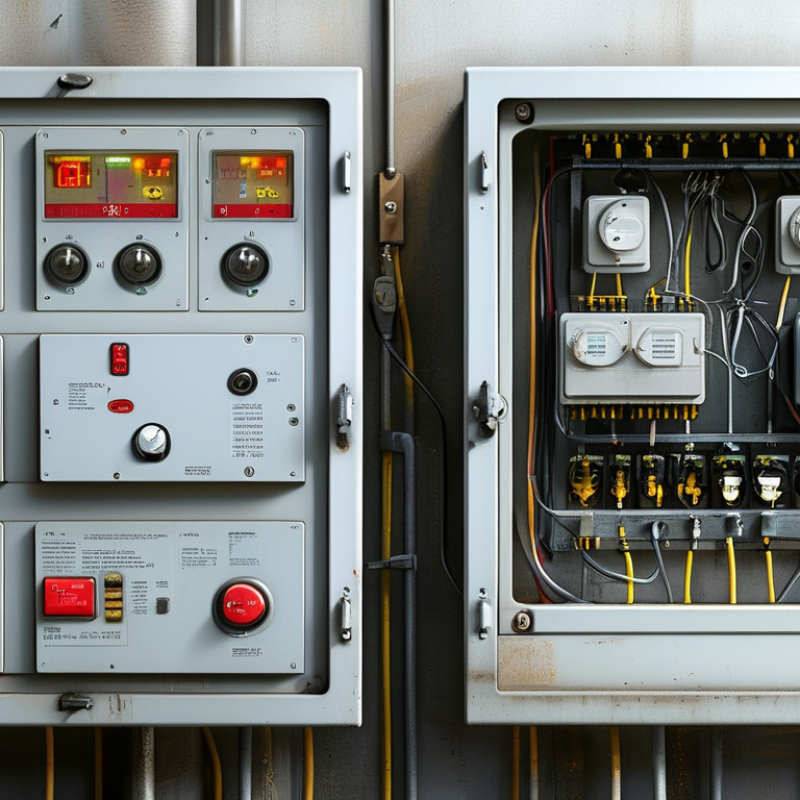
Define the Electrical Load and Application Requirements
How to Choose the Right Distribution Board?
Define the electrical load before selecting a distribution board. List every circuit, including lighting, sockets, motors, heating equipment, and future devices. Record each load in watts or amperes. Do not rely on rough estimates. A small workshop may need separate calculations for compressors, welders, and starting currents.
Calculate the connected load, then apply realistic demand and diversity factors. A board carrying 80 amps continuously should not be treated like a board carrying 80 amps occasionally. Check the supply voltage, phase arrangement, frequency, and available fault current. These details affect the main breaker, busbar rating, cable size, and protective device coordination. A qualified electrical professional should verify the calculations against local regulations.
The application also shapes the enclosure. Indoor offices may need basic protection, while dusty workshops or damp utility rooms require a suitable ingress protection rating. Leave physical space for spare circuits and safe cable bending. I have seen installations fail practical inspections because the board technically fit, but the terminals were crowded. That mistake is easy to prevent. Review heat buildup, access clearance, labeling, and maintenance conditions before ordering. Future expansion is often underestimated. A careful load schedule may feel slower, yet it exposes weak assumptions before they become expensive changes.

Select the Correct Board Type and Installation Environment
Choosing a distribution board starts with the installation environment, not appearance. A board must suit the building’s electrical load, circuit count, and supply arrangement. A small consumer unit may fit a home, while a larger panelboard may serve a workshop or commercial floor. Check phase requirements, available fault current, and space for future circuits.
Dry indoor rooms usually need a standard enclosed board. Outdoor locations require stronger protection against rain, dust, ultraviolet exposure, and temperature changes. Areas near pumps, kitchens, or washdown zones may need a higher ingress protection rating. Corrosive air can damage metal parts quietly. That risk is easy to underestimate.
Location matters too. Install the board where it remains accessible, visible, and protected from impact. Keep clear working space around the enclosure. Avoid placing it behind storage, inside damp cabinets, or beside heat-producing equipment. Cable entries should prevent water and debris from entering. Each circuit needs clear labeling, secure terminations, and suitable protective devices.
I have seen installations chosen by price alone. They looked tidy at handover, but later offered no room for expansion. That was a poor decision. Verify the design against local electrical codes and applicable standards. A qualified electrician should confirm conductor sizing, earthing, isolation, and protection settings before energizing the board. Check the environment twice. Mistakes often hide there.
Check Voltage, Current Capacity, and Circuit Configuration
Choosing a distribution board starts with the system voltage, not the enclosure size. Confirm the nominal voltage, phase arrangement, frequency, and earthing method from the electrical design. A board rated for 400 V three-phase service cannot be treated like a 230 V single-phase unit. The IEA Electricity 2024 report recorded global electricity demand at about 29,471 TWh in 2023. It also forecasts average annual growth of 3.4% from 2024 to 2026. Future load deserves attention.
Then calculate current capacity from actual demand. Include motor starting current, continuous loads, diversity, ambient temperature, and cable derating. The main busbar and incoming device must handle the design current without overheating. Check the board’s short-circuit withstand rating too. It must exceed the prospective fault current at the installation point. IEC 61439 requires verification of temperature rise, dielectric performance, and short-circuit withstand for low-voltage assemblies. Small details matter.
Circuit configuration should match how the building operates. Count outgoing ways, poles, neutral terminals, protective devices, and spare capacity. Separate lighting, socket, motor, and critical circuits where practical. Residual-current protection may require careful neutral management. Leave physical space for future circuits, but do not oversize blindly. I have seen boards with many unused ways and weak incoming capacity. That choice is not efficient. During inspection, I also check terminal torque, conductor labeling, and heat marks with a thermal camera. A licensed professional should confirm the final selection against local code and measured site conditions.
How to Choose the Right Distribution Board? – Check Voltage, Current Capacity, and Circuit Configuration
| Typical Application | Nominal System Voltage | Supply Configuration | Recommended Main Current Capacity | Typical Number of Outgoing Circuits | Common Main Protection | Typical Enclosure Rating | Key Selection Considerations |
|---|---|---|---|---|---|---|---|
| Small residential unit | 230 V AC, single-phase | 1-phase, 2-wire plus protective earth | 40–63 A | 6–12 ways | 2-pole main isolator or circuit breaker | IP30–IP40 | Allow separate circuits for lighting, socket outlets, cooking appliances, water heating, and residual-current protection. |
| Large residential unit | 230 V AC, single-phase | 1-phase, 2-wire plus protective earth | 63–100 A | 12–24 ways | 2-pole main isolator or circuit breaker | IP30–IP40 | Check the calculated maximum demand, available service capacity, spare ways, and the rating of the incoming conductors. |
| Small commercial office | 230/400 V AC, three-phase | 3-phase, 4-wire plus protective earth | 63–160 A | 18–36 ways | 4-pole main isolator or circuit breaker | IP31–IP54 | Balance single-phase loads across phases and provide dedicated circuits for lighting, sockets, HVAC, and information-technology equipment. |
| Retail or light commercial area | 230/400 V AC, three-phase | 3-phase, 4-wire plus protective earth | 100–250 A | 24–48 ways | 4-pole main circuit breaker | IP31–IP54 | Confirm short-circuit withstand capability, discrimination between protective devices, and sufficient space for future circuits. |
| Workshop with motor loads | 230/400 V AC, three-phase | 3-phase, 4-wire or 3-wire plus protective earth | 160–400 A | 18–42 ways | 4-pole or 3-pole main circuit breaker, subject to system design | IP54–IP65 | Consider motor starting current, voltage drop, fault level, emergency isolation, overload protection, and the effects of dust or moisture. |
| Outdoor or utility installation | 230/400 V AC, single- or three-phase | Configuration depends on the incoming supply | 40–250 A | 6–24 ways | Main isolator or circuit breaker matched to the supply arrangement | IP55–IP66 | Use an enclosure suitable for rain, dust, UV exposure, condensation, and corrosion; verify cable entries and drainage provisions. |
| High-load electric heating or charging area | 230/400 V AC, three-phase where applicable | 1-phase or 3-phase, depending on equipment load | 100–400 A | 12–36 ways | Main circuit breaker coordinated with feeder and equipment protection | IP31–IP54 | Calculate continuous load, diversity, thermal derating, conductor size, voltage drop, and the required residual-current protection. |
Note: The values shown are typical planning ranges, not a substitute for electrical design. Final selection must comply with the applicable local wiring rules, equipment standards, fault-current requirements, installation environment, and approval requirements.
Evaluate Safety Features, Protection Devices, and Compliance
Choosing a distribution board begins with safety, not appearance. A metal enclosure should resist impact, moisture, and unwanted access. Check its IP rating against the installation location. A dusty workshop needs different protection from a dry office.
Protection devices must match the circuit design. MCBs protect cables from overloads and short circuits. RCDs help reduce electric shock risk by detecting leakage current. RCBOs can combine both functions on individual circuits.
Where lightning or switching surges are possible, consider a suitable surge protection device. Verify the board’s rated voltage, current, and short-circuit capacity. These values must exceed the measured or calculated fault level. Otherwise, a neat installation may still fail dangerously.
Earthing and bonding deserve close inspection. Every circuit should have clear conductor identification, secure terminals, and adequate space for safe maintenance. Labels should identify circuits at a glance, even under poor lighting. Compliance requires more than a certificate on paper. Compare the design with the applicable local electrical code and relevant IEC requirements where adopted. Confirm device coordination, enclosure ratings, testing procedures, and emergency access. A qualified electrician should inspect and test the completed board.
Small details matter.
A loose neutral can create confusing faults. Overcrowded wiring can hide heat damage. In practice, even experienced installers can overlook spare ways or unclear labels.
I would photograph connections before closing the cover and record test results. That habit is imperfect, but it encourages careful review.
Compare Materials, Expandability, Maintenance, and Total Cost
How to Choose the Right Distribution Board?
Compare Materials, Expandability, Maintenance, and Total Cost
Choosing a distribution board requires more than checking its current rating. The enclosure material affects durability, heat control, and installation conditions. Metal boards usually offer strong impact resistance and effective grounding continuity. Nonmetallic boards resist corrosion and may suit damp or chemically exposed areas. However, their heat performance and mechanical strength can vary. Always check the enclosure rating and local electrical requirements.
Expandability deserves careful attention. Leave spare ways for future circuits, protective devices, or equipment upgrades. A crowded board makes wiring difficult and increases inspection time. I have seen projects save money initially, then require costly replacement because no space remained. That decision looked efficient. It was not. Choose a layout with clear cable access and realistic future capacity, not unlimited spare space.
Maintenance also influences total cost. Clear labels, accessible terminals, and removable covers help technicians work safely and quickly. Regular visual checks can reveal discoloration, loose connections, or moisture marks before faults develop. Include inspection time, replacement parts, labor, and possible downtime in the budget. The lowest purchase price may become expensive after several years. No option is perfect, so compare documented test results, installation conditions, and advice from a qualified electrical professional.
Article Source:
Contact Us
Phone: (650) - 522-4653 (GOLF)
Fax: (650) 522-7511
Tee Time Reservations: (650) 522-4653 (GOLF)
Location
1700 Coyote Point Drive
San Mateo, CA 94401