2026 Top Types of Custom Medals With Ribbons?
The 2026 guide to custom medals with ribbons begins with a practical question: what should the medal communicate before anyone reads its inscription? A marathon medal may need a bold silhouette, while a school award often benefits from clean lettering and durable enamel. Military-style designs require extra care, especially when colors, symbols, or ribbon patterns carry strong meaning.
Award designer Sarah Williams observes, “A successful medal should feel personal in the hand, not merely impressive in a product photograph.” That principle remains useful when comparing sports medals, academic awards, corporate recognition pieces, commemorative medals, and challenge coins. The ribbon width, clasp strength, edge finish, and plating choice can change the entire experience. Small details matter.
Some trends may disappoint.
Oversized designs attract attention, but they can become heavy and awkward during ceremonies. Glitter finishes photograph well, yet they may hide fine lettering under bright lights. Sustainable materials are promising, although suppliers do not always explain their coatings, recycled content, or production limits clearly. Buyers should request physical samples, color proofs, metal specifications, and delivery timelines before approving large quantities. A cheaper quote can become expensive after revisions.
This overview examines the top types of custom medals with ribbons expected to shape 2026 purchasing decisions. It considers appearance, function, personalization, durability, and budget. The best choice is rarely the most complicated one. It is the design that feels convincing, readable, and appropriate when held by the recipient.
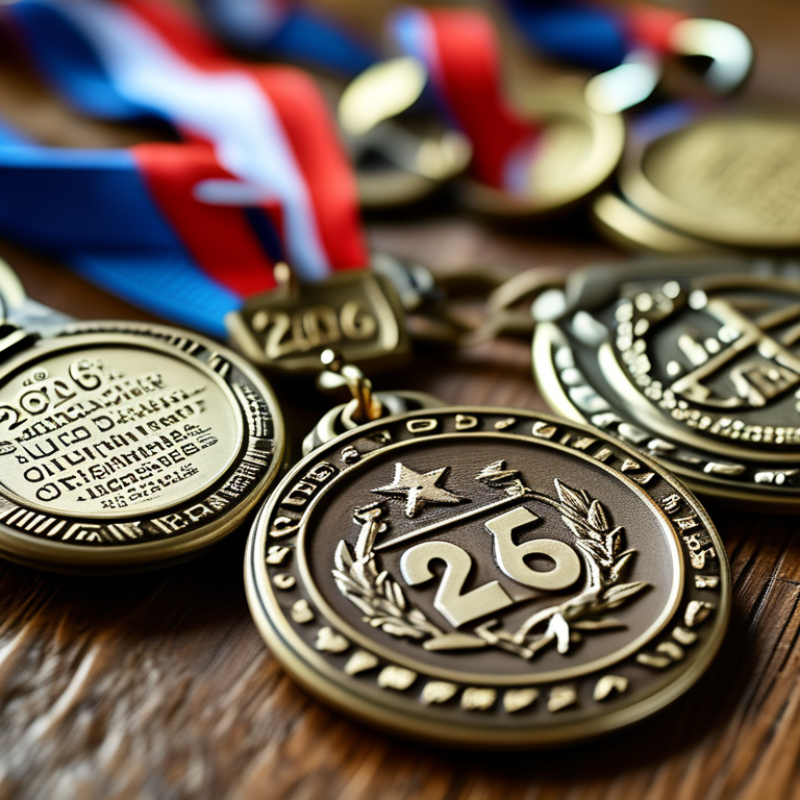
Custom Medal Categories: Sports, Military, Academic, Corporate, and Service Awards
In 2026, custom medals with ribbons are becoming more purposeful, not merely decorative. Each category communicates a different achievement and requires careful design choices. Sports medals often feature action silhouettes, event dates, and durable finishes for repeated handling. A blue, red, or gold ribbon can match team colors. However, overly detailed artwork may disappear on a small medal.
Military-style awards require restraint, accurate symbolism, and respectful presentation. Engraved service details should remain readable without overcrowding the surface. Academic medals commonly use books, laurel leaves, stars, or school-related emblems. A polished edge and balanced lettering can make graduation ceremonies feel more significant. Small errors matter here. A wrong date or title can undermine trust.
Corporate awards usually highlight milestones, leadership, innovation, or sales performance. Clean geometry and restrained colors often suit professional settings. Service awards can honor volunteering, emergency assistance, community support, or long-term commitment. Their ribbons should feel comfortable during ceremonies and remain secure after frequent use. From practical production experience, a 2.5-inch medal offers enough room for most logos and text. Yet, more space does not guarantee better design. Proofreading, ribbon testing, plating inspection, and checking the final sample remain essential. A beautiful concept can still fail when the clasp feels weak or the engraving lacks contrast.
| Custom Medal Category | Typical Award Purpose | Common Recipients | Typical Medal Shapes | Common Ribbon Styles | Frequently Used Materials | Personalization Options | Typical Presentation Features |
|---|---|---|---|---|---|---|---|
| Sports Awards | Recognize participation, placement, championships, personal achievement, or completion of an athletic event. | Athletes, teams, coaches, officials, and event participants. | Round medals, shields, stars, event-specific silhouettes, and sport-related outlines. | Team colors Striped ribbons Neck ribbons | Die-cast zinc alloy, iron, brass, aluminum, and plated metal. | Event name, year, placement, sport icon, division, participant name, and serial number. | Gold, silver, and bronze finishes are commonly used for first, second, and third place. |
| Military and Service Medals | Recognize duty, service length, conduct, operational participation, or a specific achievement. | Military personnel, veterans, public-safety personnel, and members of uniformed services. | Crosses, stars, shields, circular medals, and emblem-based designs. | Regulation-style bars Vertical stripes Solid-color ribbons | Stamped brass, bronze, silver-tone alloys, stainless steel, and enamel-coated metal. | Unit or organization emblem, service period, rank or role, campaign reference, and achievement wording. | Ribbon bars, suspension mounts, display cases, and formal presentation packaging are common. |
| Academic and Educational Medals | Honor academic excellence, graduation milestones, research, scholarship, or competition results. | Students, graduates, researchers, educators, and academic competition participants. | Round medals, open-book shapes, shields, laurel wreaths, and subject-themed silhouettes. | School colors Two-tone ribbons Printed ribbons | Die-cast zinc alloy, brass, aluminum, pewter, and plated steel. | Institution name, academic year, subject, degree level, recipient name, rank, and achievement title. | Laurel wreaths, books, torches, stars, and graduation symbols are frequently incorporated. |
| Corporate Recognition Awards | Celebrate employee performance, years of service, leadership, innovation, sales results, or team contributions. | Employees, managers, project teams, sales representatives, and business partners. | Round, rectangular, shield-shaped, geometric, and custom emblem silhouettes. | Custom color sets Logo-free patterns Satin ribbons | Brass, zinc alloy, stainless steel, aluminum, and premium plated metal. | Award title, recipient name, year, service milestone, department, performance category, and achievement date. | Presentation boxes, magnetic backs, engraved inserts, and coordinating certificates are often used. |
| Community and Volunteer Service Awards | Acknowledge volunteer hours, civic involvement, fundraising, community support, or humanitarian efforts. | Volunteers, nonprofit participants, community leaders, donors, and local program members. | Hands, hearts, helping symbols, shields, circles, stars, and community-themed outlines. | Civic colors Gradient ribbons Printed messages | Aluminum, iron, brass, zinc alloy, recycled metal, and enamel-finished alloys. | Service title, volunteer hours, event date, service year, recipient name, and community message. | Symbolic colors, raised lettering, inspirational wording, and gift-ready packaging are common. |
| Emergency Response Awards | Recognize lifesaving actions, emergency response, preparedness, bravery, or public protection. | Firefighters, emergency medical personnel, search-and-rescue teams, dispatchers, and public-safety volunteers. | Shields, stars, crosses, helmets, rescue symbols, and circular medallions. | High-contrast stripes Reflective accents Formal neck ribbons | Brass, stainless steel, zinc alloy, iron, and enamel-coated metal. | Incident date, response role, service number, unit identifier, commendation text, and recipient name. | Engraved backs, protective cases, display mounts, and matching lapel pins may accompany the medal. |
| Arts and Cultural Achievement Awards | Honor achievement in music, dance, theater, visual arts, writing, or cultural programs. | Artists, performers, students, instructors, creators, and cultural program participants. | Abstract forms, masks, instruments, stars, laurels, and artistic silhouettes. | Decorative patterns Satin finish Multi-color ribbons | Brass, zinc alloy, aluminum, pewter, and enamel-filled metal. | Program title, category, season or year, recipient name, performance title, and achievement level. | Colorful enamel, textured backgrounds, cut-out details, and presentation boxes are popular design elements. |
| Participation and Completion Medals | Mark completion of a race, training program, educational course, challenge, or organized activity. | Participants, trainees, students, runners, and program graduates. | Round medals, milestone numbers, course outlines, and event-specific shapes. | Event colors Printed slogans Seasonal designs | Die-cast zinc alloy, iron, aluminum, and lightweight plated metal. | Event name, completion year, distance or level, participant name, date, and milestone number. | Medals often include a durable neck ribbon and a design optimized for group distribution. |
Contact Us
Phone: (650) - 522-4653 (GOLF)
Fax: (650) 522-7511
Tee Time Reservations: (650) 522-4653 (GOLF)
Location
1700 Coyote Point Drive
San Mateo, CA 94401